Dear Family of Friends,
It doesn’t rain in the summer in Israel, where our ancestral religion evolved. And there is no great river, like the Nile in Egypt, or the Tigris and Euphrates in Mesopotamia, so in the days the Temple stood in Jerusalem, life literally depended on heaven.
Each fall, on the full moon of Tishrei which precedes the rainy season, the people would make a pilgrimage to the Temple in Jerusalem, where a great festival would be held. The festival lasted a week and a day, and included the ceremonial sacrifice of no fewer than seventy bulls, alongside the building of ceremonial harvest huts known as sukkot, and the waving of fertility symbols – which we now call the lulav. The festival would culminate on the eighth day with fervent prayers for rain and a fertile year to come.
On the new moon of that same month, a shofar would be sounded throughout the land, to announce the coming of the festival. And on the tenth day of the month – five days before the festival – the priests would hold a dramatic ritual to cleanse the altar of the residue of the past year’s sins, in preparation for great rain prayers of Sukkot. These are the festivals we now know as Rosh Hashanah and Yom Kippur.
Our ancient rabbis, in their wise reimagining of our religion following the destruction of the Temple, shifted our focus from the centralized sacrifices of Sukkot to the personal prayers of the people in our synagogues on Rosh Hashanah and Yom Kippur. We are no longer merely cleansing the altar in anticipation for the life-or-death rain prayers, but cleansing our own souls in preparation for the coming year; each of us serving as priest for the altar of our own heart.
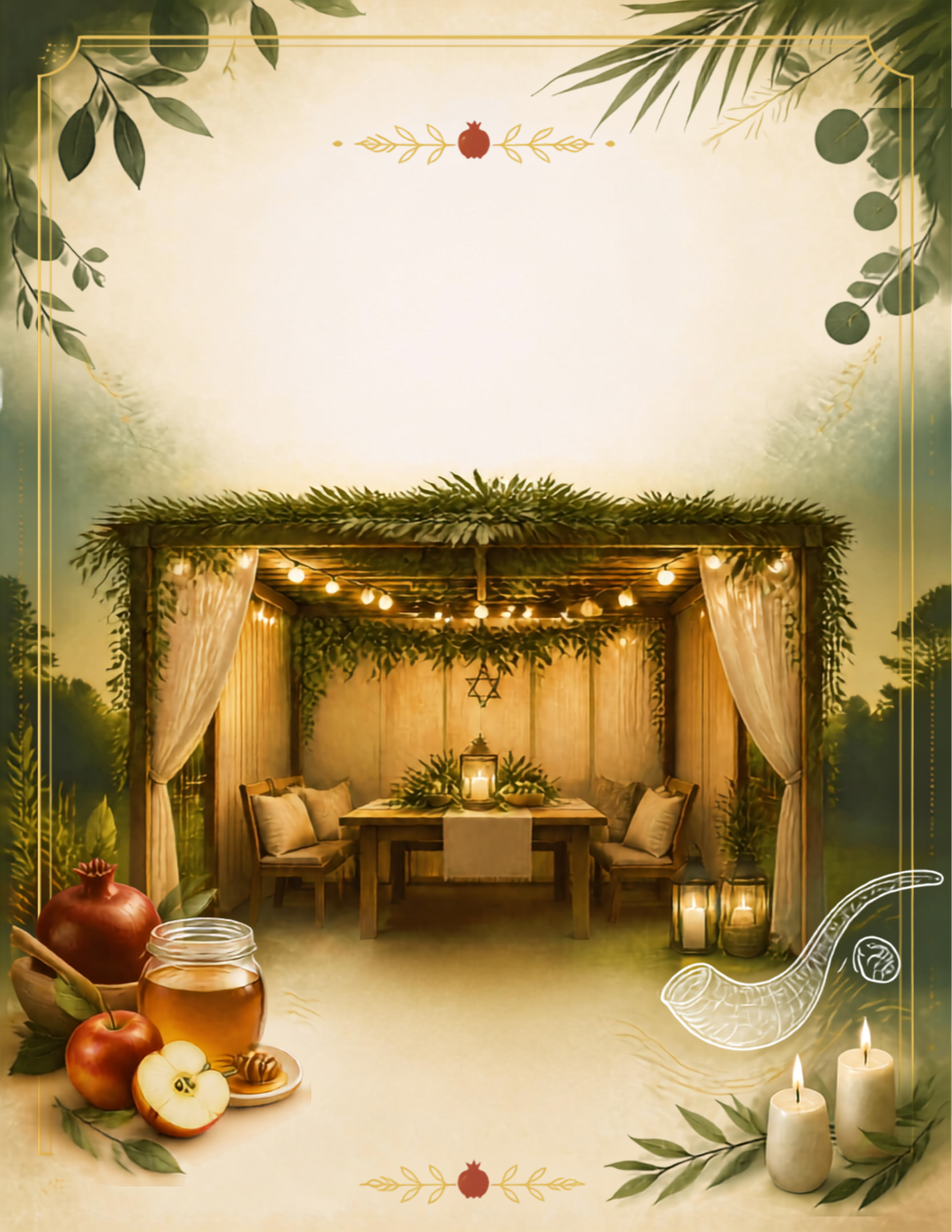
And yet, as we enter the High Holidays, Sukkot – which the Rabbis call “The Time of Our Joy” – remains our objective. The “new normal” we yearn for: of simple joys with family and friends. The temporary structure of the sukkah, with its roof of branches, symbolizes our connection with the natural world and our vulnerability to it. The openness of it symbolizes our connection with the world around us and the people in our lives. On Yom Kippur, we face our own mortality. On Sukkot, we bask in the relief of being alive, and the possibilities of the new year.
As we plunge into the rituals of Rosh Hashnah and Yom Kippur, I encourage you to keep your sights set on the end of the month. Immerse yourself in the sounds and symbols of the synagogue, and then emerge to the joys of Sukkot. Maybe build your own sukkah this year; celebrate with the Brotherhood on the first night; visit Ken in his sukkah on the second night; come wave the lulav with me at the Community House sukkah; come celebrate Simchat Torah at the end of the season, as we complete our liturgical reading cycle and begin it anew.
Wishing you and yours a shanah tovah umetukah – a good and sweet year!
Reb Josh


